


Cement-retained crowns or bridges intended for implants
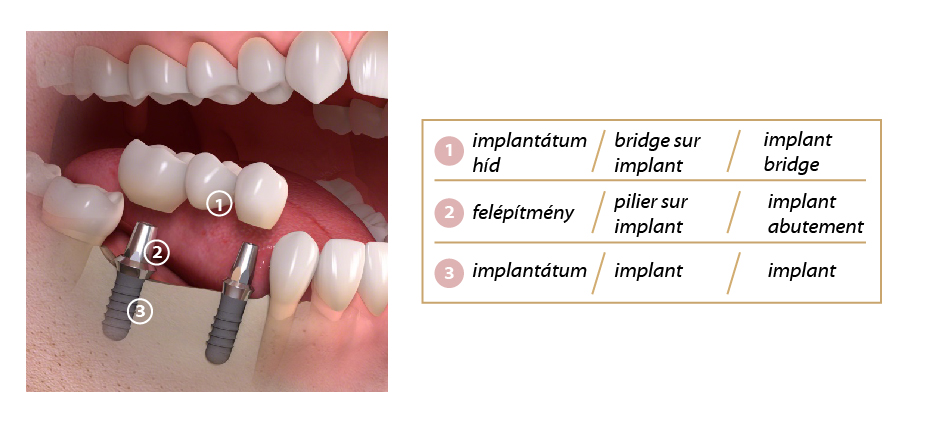
Implant is the artificial root canal of the missing tooth inserted into the bone underneath the gums. Following the implant’s integration into the bone (3 months), the tooth replacement (crown or bridge) is prepared. Between the implant and the crown an abutment is installed that is screwed into the implant to support the crown (much in the same way as a prepared or filed tooth stump, or prep, does). As regards their retention, implant borne crowns can either be cement or screw retained. 
What exactly is a cement-retained crown?
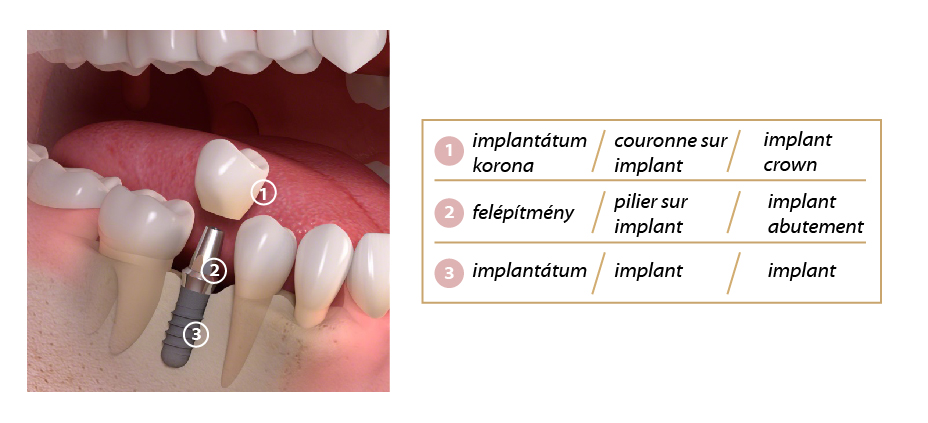
A single-tooth edentulism can be restored, among others, by means of an implant. This fixed tooth replacement consists of 3 parts:
- implant
- abutment
- Cement-retained metal ceramic or metal- free (E.Max or Zirconia) crowns. Cement-retained implant crown means that the crown (or bridge) is secured on the abutment with a special kind of luting cement.
What are the benefits of cement-retained tooth replacements over screw-retained ones?
- From the patient’s point view their greatest advantage consists in the fact that as they are cemented onto the abutment screwed into the implant they have better aesthetics than screw-retained crowns with the latter having a hole on top through which a through bolt is screwed into the abutment to secure the crown on the implant.
- They are less expensive than screw-retained crowns since crowns in this instance are designed for a pre-fabricated abutment “taken out straight from the technician’s drawer”.
- From the dental technician’s viewpoint a cement-retained crown is simpler and faster to prepare, since it “simply” requires the preparation of a crown to be fitted onto a pre-fabricated abutment.
- From the dentist’s point of view the insertion of a cement-retained crown is simpler and faster than that of a screw-retained one.

What are the disadvantages of a cement-retained crown in comparison with a screw-retained one?
Its greatest disadvantage is the fact that a crown cemented onto the abutment cannot be removed from the abutment by non-destructive means, in other words it requires to be cut off the abutment. In such instances the crown needs to be made again from scratch (with new impressions taken, new bite check, trial fitting of the denture framework, etc.). In case injury to the crown can be imputed to no fault on the dentist’s or dental technician’s part, financial liability lies fully with the patient (travel expenses, costs of re-fabricating the crown, etc.).
When does a cement-retained crown need to be removed?
The most frequent reasons include:
- The ceramic chips off due to an accident (patient’s involvement in a sporting accident, or patient’s biting a chicken bone, cherry stone, nutshell, etc.)
- Aesthetic reasons (bone and gingival retraction over the course of years, discoloration of adjacent teeth, etc.)
- The patient’s bite has changed over the years, or incidental loss of other teeth, worn or chipped off teeth indicate bite adjustment and realignment of teeth.
- Unfortunately the through bolts fastening the abutment are also subject to injury due to a forceful bite, nocturnal teeth grinding or teeth clenching, as well as the loosening, “fatigue” or breakage of the screw thread. In such cases the tooth replacement (crown or bridge) loosens and starts wiggling in the mouth. This is a great problem since it can only be addressed by cutting off the crown and preparing it anew. In rare instances we may manage to drill the crown, locate the slot of the fastening screw, remove the small damaged through bolt, replace it with a new one and fill in the hole on the ceramic (converting thereby the cement-retained crown into a screw-retained one).
Does the removal of an implant crown imply any pain?
No. Crowns are cut off in anaesthesia, the gums and neighbouring teeth are unaffected. The only discomfort is experienced when the assistant holds the lips apart and pulls the mouth corners. The vibration and sound of the drill may be disturbing but other than causing psychic distress, it is entirely harmless…
What are the indications for installing a cement-retained implant crown?
In case multiple implant crowns are required where screw-retained replacements would be unduly expensive. With front region and patients having to comply with the utmost aesthetic requirements, e. g. job requirements. 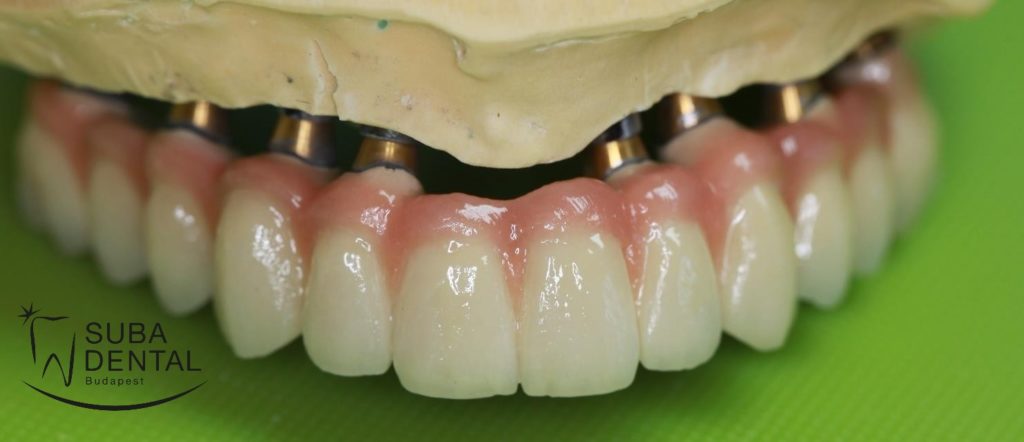
IMPORTANT NOTICE Implant borne tooth replacements require a lot more attention, care and follow-up than crowns or bridges retained by natural teeth. There is a very close relationship between oral hygiene and the longevity of implants. Follow-up panoramic radiographs and thorough tartar removal are required at least once a year. Any change or disease, etc. in our body may affect the quality of the bones, the condition of the gums, dental examinations are therefore supremely important for the timely detection and treatment of any issues that may arise.
